
Birding in the Sky Islands
You already know southeast Arizona is one of the best birding regions in the country. What you’re really deciding right now is where to sleep, how far you’ll have to drive before first light, and whether the place you pick will actually work for the way you bird.
Here’s why the Double R is built for exactly that.

BIRDERS ALREADY KNOW THIS REGION
One of the Best Birding Destinations in North America
This isn’t a stretch. Ask around in the birding community and southeastern Arizona routinely comes up as many American birders’ single favorite destination in the country-and the reason is habitat, not luck. Sonoran Desert, oak woodland, high-elevation conifer forest, and riparian corridor all sit within a short drive of each other here, which is rare anywhere in the U.S. That stacked habitat is what produces species most birders can’t find outside this region: Elegant Trogon, Violet-crowned Hummingbird, Montezuma Quail, Fox Sparrow, Gray Hawk, and Yellow-eyed Junco among them. The Double R sits inside all of it, not just near it.
WHY LOCATION IS EVERYTHING
You’re Not Just Picking a Room. You’re Picking a Radius.
Every serious birder plans a trip the same way: pick your target species first, then find lodging inside their radius-not an hour away from it, not a scenic drive that eats your best light. The Double R sits inside the Sonoita Valley, bordering the Coronado National Forest directly, with Las Cienegas National Conservation Area a short drive north and the legendary Patagonia birding corridor about 40 minutes south. You’re not commuting to the Sky Islands from a highway hotel. You’re already inside them.


THE SPECIES THAT BRING PEOPLE HERE
What You’re Actually Here For
This part of Arizona regularly produces species most U.S. birders will never see anywhere else. Within a short ride from the ranch:
- Elegant Trogon: the region’s signature bird, found in canyon riparian habitat nearby
- Violet-crowned Hummingbird: one of its most reliable U.S. strongholds is minutes away
- Gray Hawk, Zone-tailed Hawk, Thick-billed Kingbird: riparian specialties along Sonoita Creek
- Botteri’s Sparrow, Cassin’s Sparrow, Grasshopper Sparrow: grassland species in the open country surrounding the ranch itself
- Montezuma Quail: a bird many life-list travelers come specifically to find in these grasslands and oak canyons
The property and surrounding valley support 200 to 300+ recorded species across the year, spanning grassland, oak woodland, and riparian habitat-often in the same morning.
A SHORT DRIVE OR HORSEBACK TO LEGENDARY SPOTS
The Hotspots You’ve Read About, All Nearby
- Paton Center for Hummingbirds: the famous Patagonia feeder station where Violet-crowned Hummingbirds show up reliably, about 40 minutes away
- Patagonia-Sonoita Creek Preserve: over 300 species recorded along this cottonwood-willow riparian corridor, roughly the same distance
- Las Cienegas National Conservation Area: high grassland just north of the ranch, known for sparrows, raptors, and pronghorn
- Coronado National Forest: bordering the ranch directly, with canyon and oak habitat within walking distance of the property line
Most birders staying here build a loop: grassland species right on the ranch at dawn, a mid-morning drive to Patagonia for trogons and hummingbirds, and an afternoon back on the property before the light goes flat.


TWO WAYS TO WORK YOUR LIST
From the Saddle, or On Your Own Two Feet
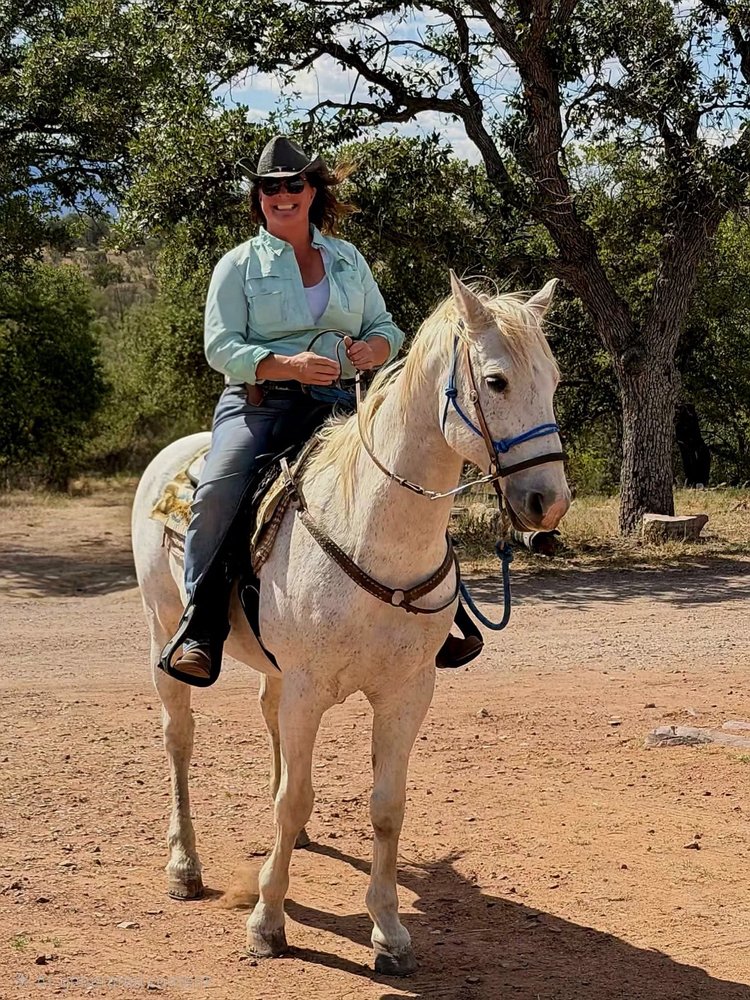
Most birding destinations give you one option: park, walk, repeat. Here you have two. Ride out on horseback and cover real ground across the grassland and canyon terrain-a quiet, elevated vantage point that puts raptors, sparrows, and open-country species in view without a single footstep of your own. Prefer to go slow and still? The same trails are yours to hike or walk at your own pace, binoculars up, stopping wherever the birds tell you to. Ron guides both, and either way, you’re covering the same land that’s home to the species on your list.
WHAT ACTUALLY MATTERS AT THE END OF THE DAY
Built for the Way Birders Actually Travel
Species lists get people to look at a map. What gets them to book is whether the place will actually work-so here’s the honest version:
- Early starts, no fuss. Birding happens at first light. Coffee and a flexible breakfast are ready before the sun is, not after.
- A porch worth sitting on. Casitas open onto the grassland itself-glass in hand or not, there’s a reason to keep your binoculars on the table instead of packed away.
- Guides who know the land, not just the trails. Ron guides rides directly through the property’s canyon and grassland terrain and can point you toward what’s been active recently-not a script, real local knowledge.
- Room to actually rest. Small-scale lodging (two casitas, one cabin) means no tour-bus crowd noise at 5 a.m., and a quiet, dark property for the kind of sleep a 6 a.m. start requires.
- A home-cooked meal waiting, not one more decision to make. After a full day in the field, dinner is already handled-no drive into town, no menu to weigh, nothing left to think about except what you saw.
- Something for the whole group. If you’re traveling with a non-birder, Sonoita-Elgin wine country and horseback riding are both a short drive or a stay away-nobody has to sit this trip out.